

Selecting a Heat-resistant Quartz Heating Element Tube Exporter vs Traditional Glass Tubes
When thermal engineers, semiconductor process specialists, and procurement managers select material components for critical industrial furnaces or laboratory reactors, what is the single operational factor that most frequently determines long-term process repeatability? While power density calculations, digital temperature controllers, and thermal insulation layers receive considerable design focus, the material interface forming the inner boundary of the heating chamber directly interacts with high-temperature atmospheres and sensitive substrates. Selecting appropriate hardware involves partnering with an experienced heat-resistant quartz heating element tube exporter that understands how boundary layer mechanics affect physical and chemical processes during thermal treatments.
Technical buyers occasionally assume that standard borosilicate glass can substitute for high-purity quartz in moderate-temperature processing units. However, fundamental differences in thermal stress tolerance, mechanical strength, and chemical stability quickly expose the severe performance limitations of traditional glass formulations under continuous heat exposure. Choosing dedicated heating hardware ensures long-term operational accuracy while reducing premature structural degradation across demanding high-temperature environments.
Understanding Gas Boundary Behavior in High-Temperature Chambers
The primary distinction between high-purity fused silica and conventional industrial glass lies in how each material behaves when brought into contact with process gases inside a sealed reaction tube. Standard laboratory glassware and technical silicates contain measurable concentrations of alkali metal oxides, sodium compounds, and boron species. When operated under high thermal loads, these volatile elements tend to migrate to the surface and leach into the surrounding atmosphere, effectively introducing unwanted ionic contaminants into delicate chemical vapor deposition processes, crystal growth environments, or semiconductor wafer diffusion runs.
In contrast, high-performance fused silica products manufactured by Lianyungang Southeast Quartz Products Co., Ltd. are engineered under rigorous purity guidelines to prevent secondary contamination. These specialty tubes maintain ultra-low hydroxyl contents below 50ppm and restrict trace metallic impurities to sub-parts-per-billion levels. Additionally, the smooth internal wall finishing achieved through precision manufacturing reduces turbulent fluid resistance, encouraging uniform gas velocity profiles and stable internal pressure conditions along the entire length of the active heating zone. By eliminating outgassing mechanisms and volatile ion release, Southeast Quartz guarantees a chemically inert microenvironment that protects delicate target substrates and preserves exact experimental conditions across hundreds of operational heating cycles.
Navigating Geometric Freedom and Large-Scale Dimensions
Beyond chemical purity considerations, structural robustness and geometric adaptability represent critical requirements when scaling up high-temperature industrial equipment or custom research installations. Traditional glassblowing and pressing methods encounter severe mechanical limitations when producing large-diameter cylindrical geometries or intricate structural modifications. These manufacturing constraints frequently yield uneven wall thickness distribution, elevated internal stress concentrations, and roundness variations that compromise vacuum-tight flange connections and seal assemblies.
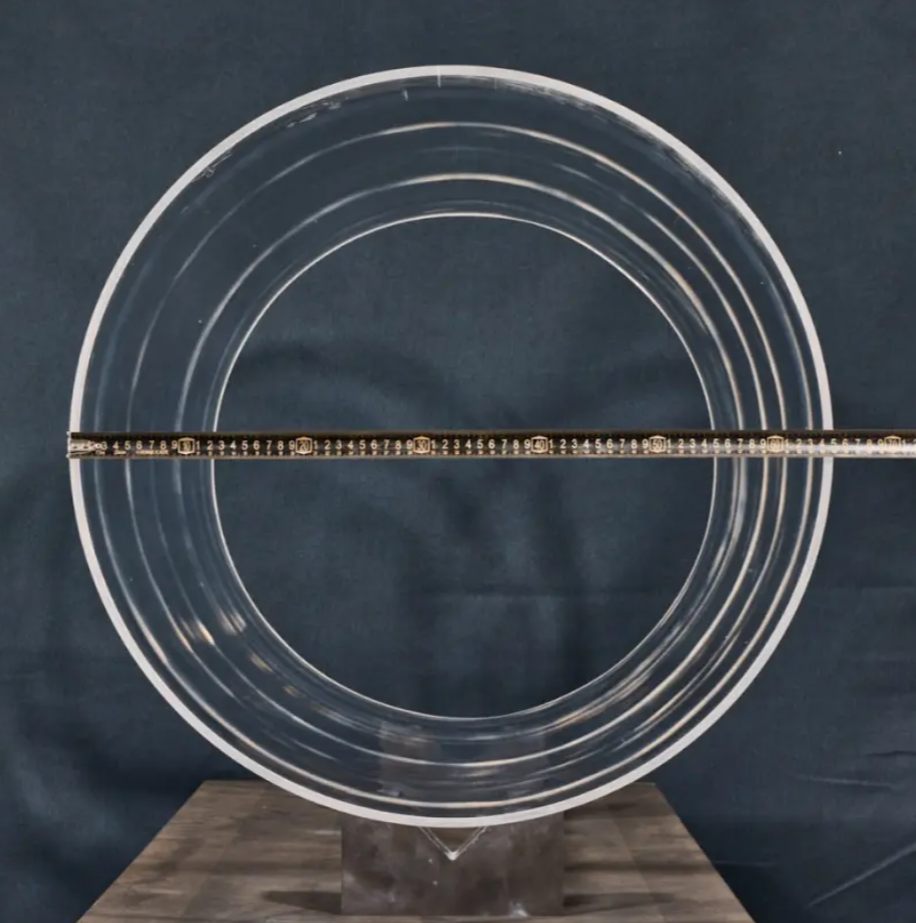
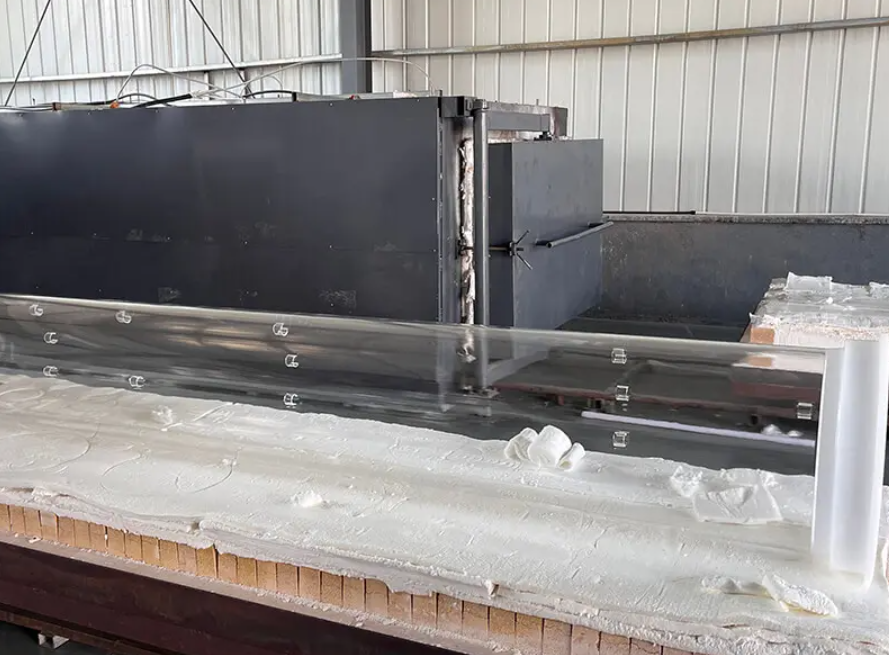
Overcoming these physical limitations requires specialized thermal forming technologies designed specifically for high-purity fused silica materials. Official technical documentation from Southeast Quartz illustrates the capability to fabricate oversized fused quartz cylinders with outer diameters reaching up to one meter, while supporting diverse geometric configurations including straight furnace liners, complex U-shaped loops, multi-channel designs, and precision-machined flange ends. Whether a specialized thermal application demands custom gas inlet ports, reinforced wall structures to resist differential pressure forces, or tailored end closures, the company adapts its thermal shaping processes to match exacting technical drawings. This advanced production capability ensures that large-scale process chambers maintain precise dimensional stability and mechanical rigidity even when operating near the thermal softening temperature of silica glass.
Evaluating Delivery Standards and Technical Documentation
The total value delivered by a professional quartz heating element tube exporter extends far beyond standard material delivery, encompassing comprehensive quality assurance procedures and detailed engineering support. Standard glass suppliers typically distribute off-the-shelf catalog items verified only by basic visual inspections, leaving process engineers to identify dimensional inaccuracies, surface micro-cracks, or thermal strain concentrations during assembly or initial system testing.
In contrast, a specialized quartz heating element tube supplier serves as a technical partner throughout the component design cycle, translating intricate customer engineering blueprints into executable manufacturing parameters. Lianyungang Southeast Quartz Products Co., Ltd. enforces multi-stage quality control protocols that inspect outer diameter, inner diameter, wall uniformity, and linear straightness tolerances within tight sub-millimeter parameters. Depending on specific process demands, components undergo specialized post-processing treatments such as fire polishing, controlled chemical acid etching, or closed-end forming. Every delivered production batch includes complete dimensional measurement records and chemical purity documentation, providing quality control managers with verifiable material history prior to equipment installation.
Achieving Process Reliability Through Verified Material Selection
Upgrading industrial heating equipment requires evaluating the long-term reliability and chemical integrity of the primary process boundary rather than focusing solely on upfront material acquisition expenses. Sourcing high-purity components from an established quartz heating element tube supplier delivers a verifiable guarantee that internal process atmospheres will remain free from thermal deformation, structural degradation, or chemical outgassing. As advanced thermal processing sectors refine operational tolerances, selecting high-purity fused silica over traditional glass remains a fundamental prerequisite for maintaining yield stability and preventing unexpected maintenance downtime.
Furthermore, aligning material procurement with rigorous engineering standards helps thermal facility operators mitigate risk and establish repeatable furnace performance across extended production schedules. By prioritizing material purity and geometric accuracy, companies optimize process efficiency while maintaining uniform environmental controls inside high-temperature processing zones. Investing in reliable component engineering ultimately secures long-term process integrity, minimizes thermal variance, and ensures robust operation across complex industrial manufacturing cycles.
For detailed technical specifications, custom fabrication capabilities, and engineering consultation regarding high-temperature fused quartz solutions, please visit the official site: https://www.dnquartz.com/
Lianyungang Hechang Machinery Co.,Ltd
Lianyungang Hechang Machinery Co.,Ltd
+ +86 15261392066
Legal Disclaimer:
EIN Presswire provides this news content "as is" without warranty of any kind. We do not accept any responsibility or liability for the accuracy, content, images, videos, licenses, completeness, legality, or reliability of the information contained in this article. If you have any complaints or copyright issues related to this article, kindly contact the author above.
