

New Evidence Digest Highlights 2026 Breast Imaging Advances for Early Detection of Breast Cancer in Young Women
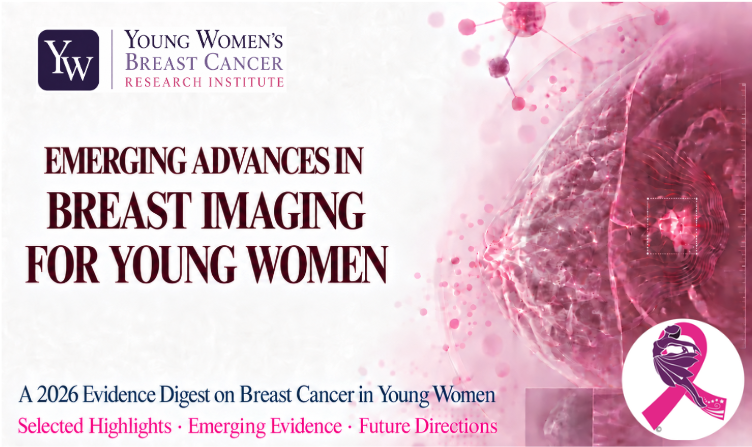
New Evidence Digest Highlights Emerging Advances in Breast Imaging for Young Women
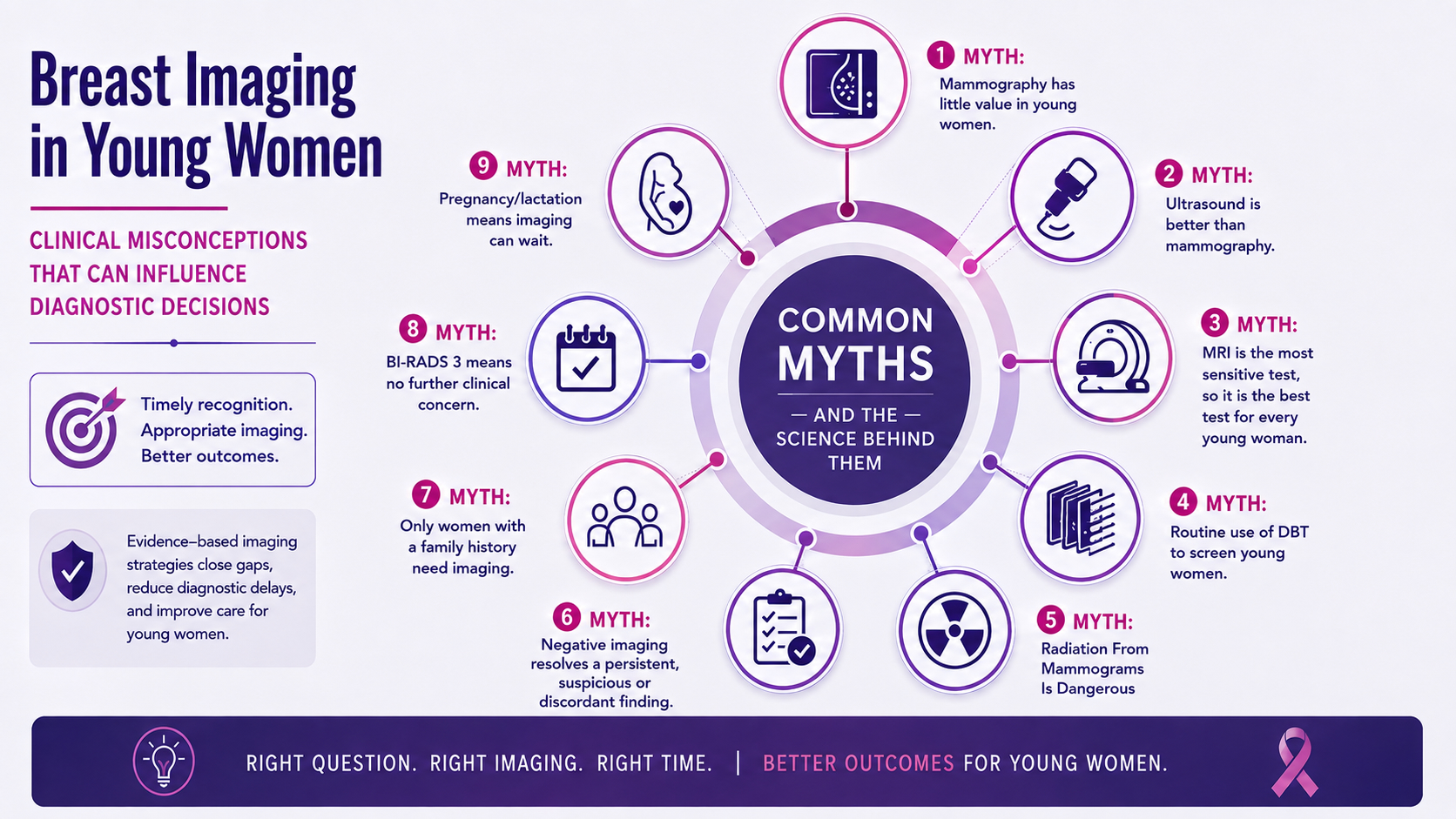
Common Myths in Breast Imaging and Science-Breaking Myths
Breaking the Myths Science Series - BCYW Foundation
Breaking the Myths about Breast Imaging, Appropriate Imaging, and Timely Awareness are Essential for Early Detection in Young Women
DENVER, CO, UNITED STATES, October 14, 2026 /EINPresswire.com/ -- Early detection is a critical opportunity to improve breast cancer outcomes for young women, but it depends on recognizing breast changes, seeking timely medical evaluation, breaking the common myths about breast imaging in young women, and accessing appropriate imaging. To deepen understanding of this connection, the Young Women’s Breast Cancer Research Institute (YWBCRI) and the Breast Cancer in Young Women Foundation (BCYW Foundation) have released *Emerging Advances in Breast Imaging for Young Women: A 2026 Evidence Digest on Breast Cancer in Young Women*, a permanent digital publication exploring recent developments that may be relevant to younger patients.The evidence digest brings together 12 completed studies, selected registered clinical trials relevant to young women, and breaks down common myths and misconceptions about breast imaging in young women. The publication discusses imaging applications beyond detection, including surgical planning, prognosis, and recurrence prediction.
From AGE-BASED SCREENING TOWARDS SELECTIVE IMAGING
The featured studies suggest that future breast imaging for young women requires more than lowering the routine screening age. Researchers are exploring personalized strategies that integrate inherited and polygenic risk, breast density, medical and reproductive history, and imaging to determine who needs screening, when screening should start, and which modality to use.
Research spans risk assessment, diagnosis, surgical planning, prognosis, treatment response, and recurrence. Breast density can both mask tumors and signal risk. Studies of genetic and family history emphasize that advanced imaging helps only when high-risk women are identified, referred, and able to access care. The studies illustrate how breast imaging is evolving beyond tumor detection toward more personalized applications across risk assessment, surveillance, diagnosis, surgical planning, prognosis, and recurrence prediction. Examples of topics include:
• Ultrasound surveillance of probably benign breast masses in very young women
• Breast ultrasound during infertility treatment
• MRI and genetic-testing utilization among younger women at elevated familial risk
• Preoperative MRI and surgical planning
• MRI-detected peritumoral edema and prognosis
• Breast density and interval-cancer risk
• Genetic risk assessment and earlier screening
• Risk-adapted rather than age-based screening
• Artificial intelligence for risk prediction beyond breast density
• MRI phenotypes in women younger than 40
• MRI radiomics and recurrence prediction
• MRI habitat analysis and HER2 biology
PRESERVING THE SERIES AS A RESOURCE FOR YOUNG WOMEN
The original 12 studies were introduced through a sequential educational post series. Although individual posts can communicate research quickly, their visibility is often short-lived, and readers may encounter only part of a series or view studies without the broader scientific context. The book also distinguishes individual study findings from broader interpretation. By presenting the studies alongside an editorial introduction, collective analysis, evidence gaps, and complete references, the publication aims to support informed reading instead of treating isolated findings as settled conclusions.
Samantha L. Heller, MD, PhD, one of the book’s editors, emphasized the importance of preserving this scientific context: “I think this is really excellent—a nice overview of current research. I appreciate both the nuanced analysis, and especially the comment that promising evidence is not the same as practice-changing evidence.’
A FORWARD-LOOKING VIEW
“The future of breast imaging for young women is not simply about starting routine screening at an earlier age. It is about developing more selective strategies that integrate symptoms, breast density, inherited risk, clinical context, and tumor biology to determine who needs imaging, when screening should begin, and which modality can provide the most meaningful information”—Luis Costa, MD, PhD, Clinical Director, Young Women’s Breast Cancer Research Institute, USA, and Director of the YWBCRI-FMUL, Lisbon, and Founding Director of the Breast Cancer in Young Women Foundation.
Early detection of breast cancer in young women requires more than a single imaging method, specialty, or awareness campaign. It involves a series of informed decisions, from noticing persistent changes and seeking medical attention to maintaining vigilance, selecting appropriate imaging techniques, resolving conflicting results, and obtaining a tissue diagnosis if needed. For radiation oncologists and trainees, the opportunity to make an impact begins even before radiotherapy. We should foster a professional environment in which a young woman is neither over-investigated out of fear nor overlooked because of her age. The aim is simple: ensure accurate clinical assessment, use the right imaging, and follow up appropriately and on time.
“The central question is not whether every young woman should receive more imaging,” said Rakesh Kumar, PhD, Scientific Director of YWBCRI and President of the Breast Cancer in Young Women Foundation. “It is how we can identify who needs imaging, when it is most appropriate, what biological information the images may provide, and how to foster functional interactions among academic onco-radiologists and breast biologists. Preserving this series as a permanent evidence digest allows emerging findings to be considered together—and within their proper scientific context.”
The publication was edited by Rakesh Kumar, PhD; Samantha L. Heller, MD, PhD; Carlos Garcia-Cantu, MD; and Luis Costa, MD, PhD.
ACCESS THE EVIDENCE DIGEST
The digital book is available without charge through the websites of both organizations:
Young Women’s Breast Cancer Research Institute
https://ywbcri.org
Direct book link: https://breastcancerinyoungwomen.org/docs/evidence-education-library/emerging-advances-breast-imaging.pdf
Breast Cancer in Young Women: Resources, Evidence and Education Library
https://breastcancerinyoungwomen.org/resources/
ABOUT
The Breast Cancer in Young Women Foundation is a United States–based nonprofit organization dedicated to saving young women's lives through targeted awareness, education, advocacy, early detection, and scientific research. It brings together clinicians, scientists, nurses, survivors, advocates, NGOs, and partners from 35 countries. It advances targeted awareness and research and highlights emerging advances in BCYW through its peer-reviewed, open-access journal, Young Women's Breast Cancer and Health (YWBC). One of the foundation's programs, the Youth Council for Breast Health (YCBH), promotes targeted awareness on educational campuses. Through evidence-based analysis, the Foundation works to improve outcomes and long-term survivorship for young women diagnosed with breast cancer.
The Young Women's Breast Cancer Research Institute (YWBCRI), a research initiative of the BYW Foundation, advances collaborative research on the earliest biological changes that precede breast cancer. It focuses on early breast biology, metabolic drivers, and opportunities to predict risk, prevent disease, and enable early intervention. The Institute aims to connect discoveries about how disease begins with approaches that could help identify and intercept risk earlier.
DISCLAIMER: Featured studies and their accompanying highlights and infographics summarize key findings. For complete study data, methodology, and interpretation, readers should consult the cited original publications. This information is provided for educational purposes only and does not substitute for the need for professional medical advice and consulting a doctor with your concerns and doubts.
Rakesh Kumar, Ph.D., Founder
Breast Cancer in Young Women Foundation
bcywf@breastcancerinyoungwomen.org
Visit us on social media:
LinkedIn
Bluesky
Instagram
Facebook
YouTube
X
Legal Disclaimer:
EIN Presswire provides this news content "as is" without warranty of any kind. We do not accept any responsibility or liability for the accuracy, content, images, videos, licenses, completeness, legality, or reliability of the information contained in this article. If you have any complaints or copyright issues related to this article, kindly contact the author above.
