

New NHS Figures Raise a Question: Can Passive Digital Biomarkers Transform Mental Health Care?
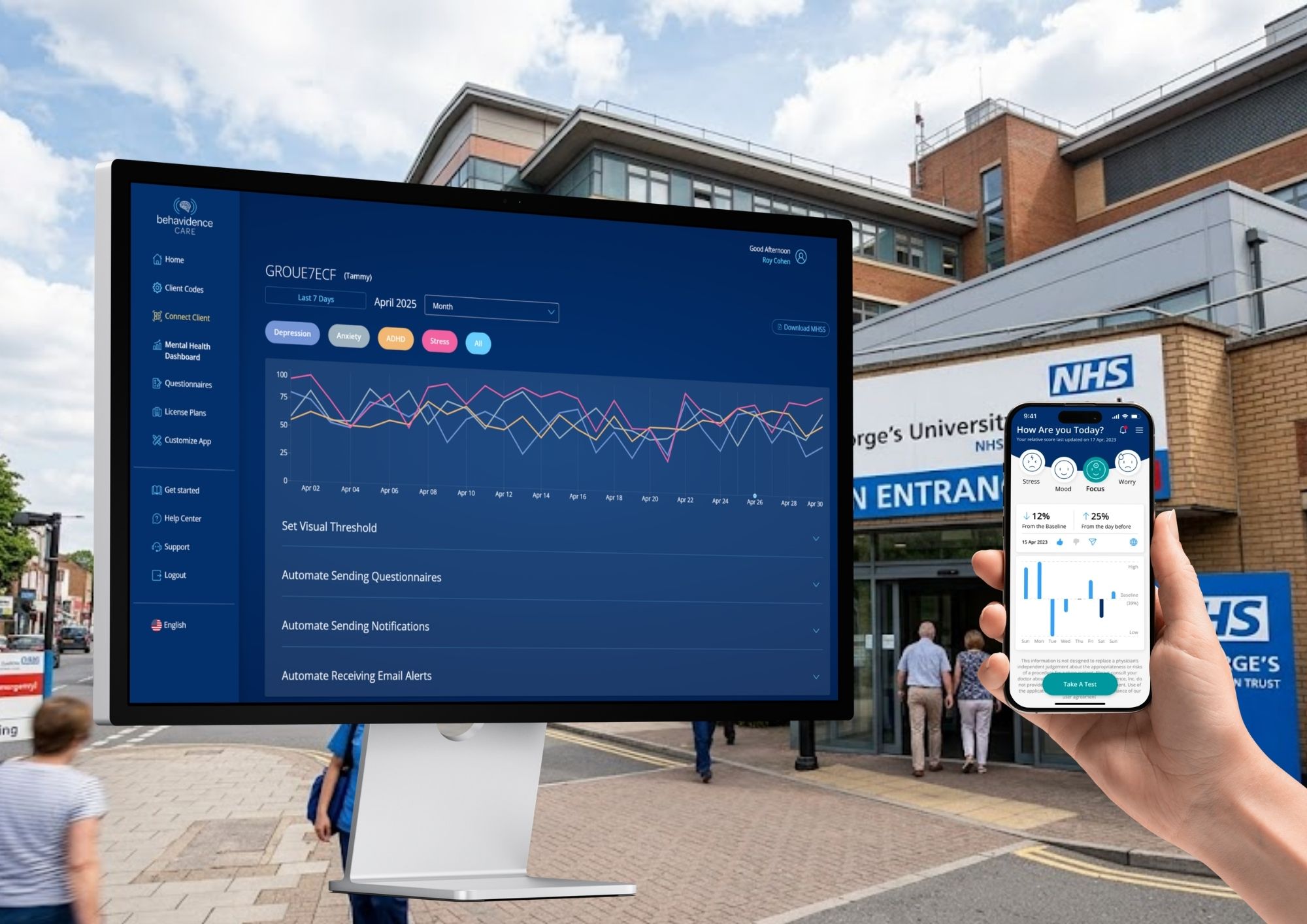
Behavidence Clinician platform and Application

Behavidence Mobile App
New NHS data shows 2.26M people have open mental health referrals. Could passive digital biomarkers help clinicians deliver care more effectively?
Healthcare systems around the world are facing increasing demand with finite clinical resources...Passive digital biomarkers have the potential to give clinicians a clearer picture”
LONDON, LONDON, UNITED KINGDOM, July 7, 2026 /EINPresswire.com/ -- The latest NHS England Mental Health Services Monthly Statistics show that 2.26 million people had an open referral to NHS-funded secondary mental health services at the end of April 2026, including 1.55 million adults and more than 520,000 children and young people. The figures underscore the growing pressure on mental health services across England.— Roy Cohen
An open referral may represent someone waiting for assessment, receiving treatment, or remaining under clinical review. While clinicians work tirelessly to support these patients, they often have limited objective information about how a person's mental health changes between appointments.
As demand continues to grow, an important question emerges:
Can passive digital biomarkers help clinicians identify deterioration earlier, allocate limited resources more effectively, deliver self-help interventions when appropriate, and ensure people experiencing acute deterioration receive timely clinical attention?
Behavidence, a neuroscience company developing AI-powered passive digital biomarkers for mental health, believes this is one of the most important questions facing modern healthcare.
Unlike traditional approaches that rely primarily on questionnaires or patient recall, passive digital biomarkers analyse changes in everyday smartphone behaviour, with informed user consent, to identify behavioural patterns associated with mental health. By monitoring trends over time rather than isolated snapshots, clinicians can gain an additional source of objective information between appointments without increasing the burden on patients.
As mental health services continue to face record demand, passive digital biomarkers could support care by:
Helping prioritise clinical resources by identifying patients whose behavioural patterns suggest worsening symptoms.
Supporting patients while they wait through timely delivery of evidence-based self-help resources, psychoeducation, or digital interventions when behavioural changes indicate they may be valuable.
Providing clinicians with objective longitudinal behavioural data to complement clinical interviews and patient-reported outcomes.
Helping detect deterioration earlier, allowing care teams to intervene sooner when appropriate.
Behavidence's technology has been clinically validated through multiple peer-reviewed scientific studies, demonstrating the ability of passive smartphone behavioural data to identify behavioural patterns associated with depression and anxiety. The company's research has been published in leading digital health journals and continues to expand across additional mental health conditions and clinical applications.
The technology is also being adopted within government healthcare programmes. Behavidence is currently working with the United States Department of Veterans Affairs, supporting initiatives focused on improving mental healthcare for veterans through passive digital monitoring and early identification of behavioural changes.
The company was founded by neuroscientist Roy Cohen, whose idea for Behavidence originated while completing a Master's degree in Applied Neuroscience at King's College London.
"During my studies, I kept asking a simple question," said Cohen. "Why do we wait until someone fills in a questionnaire or reaches a crisis before we understand that they're struggling? We continuously monitor our heart rate, our sleep and our physical activity. Mental health deserves the same kind of continuous, objective understanding. Passive digital biomarkers have the potential to give clinicians a clearer picture of how people are doing between appointments while respecting privacy and reducing patient burden."
Cohen continued, "Healthcare systems around the world are facing increasing demand with finite clinical resources. Passive digital biomarkers are not intended to replace clinicians or clinical judgement. Rather, they can provide another layer of objective information that may help clinicians prioritise care, identify deterioration earlier and offer support at the right time."
As healthcare systems increasingly explore AI-enabled models of care, passive digital biomarkers represent an opportunity to move beyond episodic mental health assessment towards continuous, evidence-informed monitoring. By combining objective behavioural insights with clinical expertise, healthcare providers may be better equipped to deliver proactive, personalised mental healthcare at scale.
About Behavidence
Behavidence is a digital health company developing clinically validated AI-powered passive digital biomarkers for mental health. Using behavioural data collected from smartphones, with user consent and privacy at its core, the company's technology helps identify behavioural patterns associated with conditions including depression, anxiety, stress and ADHD. Behavidence's technology is being evaluated and deployed across healthcare providers, researchers and government organisations to support earlier intervention and more informed mental healthcare.
Roy Cohen
Behavidence
email us here
Visit us on social media:
LinkedIn
Behavidence Digital Biomarkers
Legal Disclaimer:
EIN Presswire provides this news content "as is" without warranty of any kind. We do not accept any responsibility or liability for the accuracy, content, images, videos, licenses, completeness, legality, or reliability of the information contained in this article. If you have any complaints or copyright issues related to this article, kindly contact the author above.
