

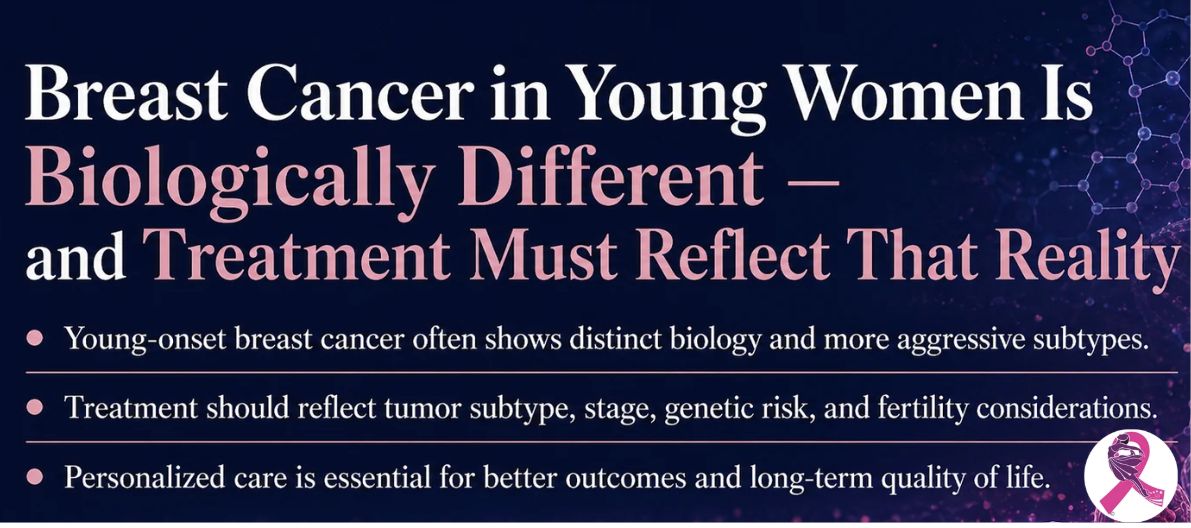
Breast Cancer in Young Women Is Biologically Different — and Treatment Must Reflect That Reality
Breaking The Myths - A Step Closer To Early Detection.
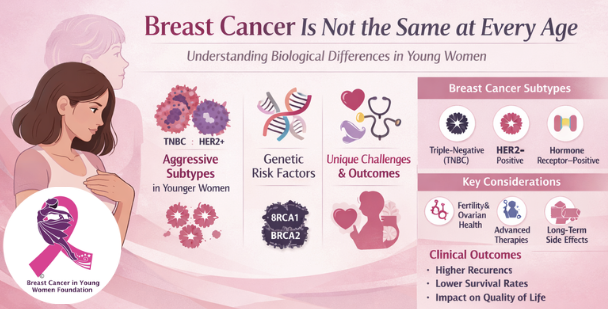
Breast Cancer Is Not the Same at Every Age.
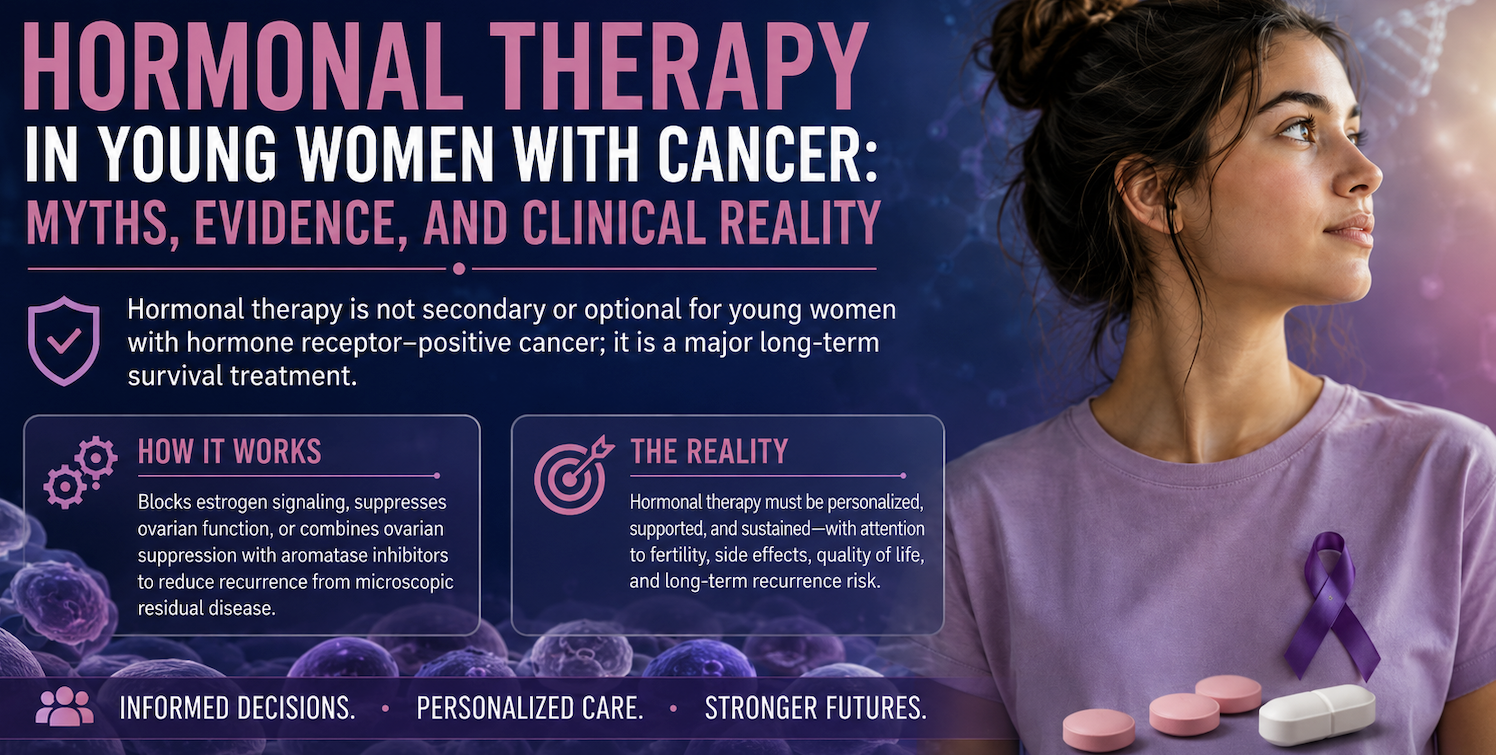
Hormonal Therapy in Young Women with Breast Cancer.
New awareness BCYWF articles explain how age, tumor subtype, fertility, and endocrine therapy influence diagnosis, treatment, recurrence risk, and survivorship.
DENVER, CO, UNITED STATES, July 7, 2026 /EINPresswire.com/ -- To address the gaps in breast health awareness, the Breast Cancer in Young Women Foundation (BCYW Foundation) has released two new awareness LinkedIn articles by experts highlighting a critical message for patients, families, clinicians, researchers, and breast health advocates: breast cancer in young women is not simply the same disease as that seen earlier in life.The age at diagnosis can affect tumor subtype, stage, aggressiveness, genetics, fertility options, treatment tolerance, long-term side effects, recurrence risk, and overall quality of life. Together, the two articles call for a shift away from broad assumptions and toward age-aware, biology-informed, and patient-centered care for breast cancer.
TWO ARTICLES, ONE SHARED MESSAGE
The first article, “Breast Cancer Is Not the Same at Every Age,” by Rakesh Kumar, PhD and Carlos Garcia-Cantu, MD, FACS, discusses how breast cancer varies by age and is not a single disease (reference 1 below). Younger women tend to develop more aggressive tumor types, such as triple-negative and HER2-positive cancers, more often than older postmenopausal women. Additionally, hormone receptor–positive cancers, which are typically viewed as less aggressive, may actually behave more aggressively in premenopausal women.
The second article, “Hormonal Therapy in Young Women with Breast Cancer: Myths, Evidence, and Clinical Reality,” by Rakesh Kumar, PhD and Michael Gnant, MD, FACS, FEBS, emphasizes hormone receptor–positive breast cancer and presents endocrine therapy as a key long-term survival approach—rather than a secondary or optional treatment (reference 2 below). For many young women, hormonal therapy plays a crucial role in lowering recurrence risk and enhancing long-term outcomes.
WHY AGE MATTERS IN BREAST CANCER
Breast cancer is often seen as a single disease, but its biological features can vary greatly with age. In young women, age is more than just a demographic factor; it also signals biological and clinical differences.
Younger women tend to be diagnosed with faster-growing tumors, more aggressive molecular subtypes, and cancers found at later stages. They frequently experience diagnostic delays because breast symptoms are often misattributed to benign causes, hormonal changes, dense breast tissue, pregnancy, breastfeeding, or the mistaken idea that breast cancer is uncommon in young women.
This results in a dangerous intersection: lower perceived danger paired with potentially more aggressive biological behavior.
The BCYW Foundation stresses that ongoing breast changes in young women require evaluation based on symptoms and clinical concern, rather than being dismissed due to age.
BIOLOGY, SUBTYPE, AND STAGE SHAPE OUTCOMES
The first article emphasizes the importance of breast cancer subtypes. Tumors are usually classified based on the presence of estrogen receptor, progesterone receptor, and HER2, which guide treatment options and prognosis.
Young women are more often affected by subtypes that have higher proliferation rates, greater chances of metastasis, and increased risk of recurrence. Triple-negative breast cancer, lacking estrogen receptor, progesterone receptor, and HER2, limits the use of endocrine and HER2-targeted therapies. Although HER2-positive disease is now highly treatable with modern targeted therapies, it can still present with larger tumors, higher grade, and nodal involvement in younger patients.
The article also highlights that hormone receptor–positive disease should not be automatically considered low risk in young women. Factors like premenopausal hormone biology, ovarian function, tumor proliferation, and long-term recurrence risks complicate treatment planning.
HORMONAL THERAPY IS NOT AN OPTIONAL ADD-ON
The second article highlights a common misconception among young women with hormone receptor–positive breast cancer: that hormonal therapy is a secondary or optional treatment after chemotherapy, or that it can be stopped if side effects occur.
The Foundation stresses that endocrine therapy is often a key long-term treatment for hormone receptor–positive disease. It works by blocking estrogen-driven tumor growth and lowering the chance of recurrence from microscopic residual disease that may remain undetectable after surgery, chemotherapy, or radiation.
For young women, endocrine therapy options include tamoxifen, ovarian function suppression, or aromatase inhibitors with ovarian suppression.
The article emphasizes that aromatase inhibitors are ineffective in premenopausal women unless ovarian function is suppressed, because active ovaries continue to produce estrogen.
THE ADHERENCE CHALLENGE MUST BE TAKEN SERIOUSLY
The article also mentions that hormonal therapy can be difficult, with side effects such as hot flashes, sleep disturbances, sexual dysfunction, mood swings, musculoskeletal problems, bone-density reduction, and effects on quality of life.
For younger women, these issues frequently compound worries about fertility, relationships, career, parenting, personal identity, and long-term survival. The Foundation’s message is not to downplay or overlook these side effects but to anticipate, recognize, and handle them proactively.
Stopping therapy without consulting a healthcare professional can diminish its protective benefits. The public health objective should be to assist young women in maintaining effective treatment through enhanced counseling, management of side effects, fertility planning, emotional support, and shared decision-making.
FERTILITY AND SURVIVORSHIP MUST BE PART OF THE CONVERSATION
For young women, breast cancer treatment involves more than just eliminating the disease; it also aims to protect future health, family planning options, sexual well-being, bone and heart health, emotional stability, career continuity, and overall quality of life.
The articles emphasize the importance of early incorporation of fertility preservation, genetic counseling, ovarian suppression, endocrine therapy duration, risk reduction methods, and survivorship care.
Since young women can live for decades after treatment, focusing on long-term effects is especially vital. The Foundation urges clinicians and healthcare systems to recognize survivorship in young women as a distinct public health concern rather than an afterthought.
BREAKING MYTHS THAT CAN WEAKEN CARE
Together, the articles debunk several common myths:
• Breast cancer risk varies with age
• Young women are not “too young” to face significant risk
• Hormone receptor–positive disease can be biologically complex in premenopausal women
• Chemotherapy is not always the primary treatment
• Hormonal therapy is essential for many young women with estrogen-driven cancer
• Side effects should not lead to silent discontinuation of therapy without medical advice
• Five years of endocrine therapy might not be enough for everyone
Fertility issues need to be addressed early, before treatment choices are finalized. These myths influence patient behavior—they can cause delays in evaluation, lower adherence, give false reassurance, increase fear, or prevent young women from receiving care suited to their biology and life stage.
REINFORCEMENT OF BREAST HEALTH
The Breast Cancer in Young Women Foundation calls for broader awareness that acknowledges the biological and clinical realities of early-onset breast cancer.
For young women and families, this means taking persistent breast symptoms seriously and seeking timely evaluation.
For clinicians, it means avoiding age-based dismissal, recognizing aggressive subtypes, addressing fertility and ovarian function early, supporting genetic counseling when appropriate, and helping patients adhere to long-term therapies.
For researchers, it means expanding age-specific studies, deepening understanding of early-onset tumor biology, and ensuring that clinical trials include diverse younger populations.
For breast health communicators, it means moving beyond simplified slogans and providing young women with accurate, practical, and empowering information.
TAKEAWAY
A young woman with breast cancer is not just an early case of a typical disease. She may be facing a biologically distinct condition that requires earlier recognition, individualized treatment, and age-specific survivorship support.
The biggest threat is not hormonal therapy itself but the myths that prompt young women to stop, delay, or underestimate it. Endocrine therapy should be framed as vital for survival, long-term control, and informed survivorship.
The Breast Cancer in Young Women Foundation emphasizes the importance of biology, treatment adherence, and survivorship for patients, clinicians, researchers, and advocates.
FOR FULL DETAILS, readers are encouraged to read these articles on LinkedIn.
Reference 1: “Breast Cancer Is Not the Same at Every Age: Understanding Biological Differences in Young Women” by Rakesh Kumar, PhD and Carlos Garcia-Cantu, MD, FACS.
https://www.linkedin.com/pulse/breast-cancer-same-every-age-breast-cancer-in-young-women-found-c8gzc/
Reference 2: “Hormonal Therapy in Young Women with Breast Cancer: Myths, Evidence, and Clinical Reality: Reframing endocrine therapy as a life-saving strategy—not an optional add-on—for young women with breast cancer,” by Rakesh Kumar, PhD and Michael Gnant, MD, FACS, FEBS.
https://www.linkedin.com/pulse/hormonal-therapy-young-women-breast-hxevc/
ABOUT THE BCYW FOUNDATION
The Breast Cancer in Young Women Foundation (BCYW Foundation) is a U.S.-based nonprofit public charity organization dedicated to breast cancer in young women. The BCYW Foundation brings together a diverse network of scientists, oncologists, surgeons, survivors, NGOs, and partners from 35 countries. The foundation is advancing its targeted awareness and research efforts and highlighting emerging advances in BCYW through its peer-reviewed, open-access Journal of Young Women's Breast Cancer and Health. More recently, the BCYW Foundation has established the Young Women’s Breast Cancer Research Institute (YWBCRI) to advance research on the early biology, detection, interruption, and prevention of breast cancer in young women. Through evidence-based analysis, the Foundation works to improve outcomes and long-term survivorship horizons for young women diagnosed with breast cancer.
DISCLAIMER: This information is for educational purposes only and is not a substitute for professional medical advice. Please consult a doctor for any concerns or questions.
Rakesh Kumar, Ph.D., Founder and CEO
Breast Cancer in Young Women Foundation
+1 303-900-8066
bcywf@breastcancerinyoungwomen.org
Visit us on social media:
LinkedIn
Bluesky
Instagram
Facebook
YouTube
X
Legal Disclaimer:
EIN Presswire provides this news content "as is" without warranty of any kind. We do not accept any responsibility or liability for the accuracy, content, images, videos, licenses, completeness, legality, or reliability of the information contained in this article. If you have any complaints or copyright issues related to this article, kindly contact the author above.
