

New Book Recovers the Lost Stories of Science's Invisible Architects of Freeze-Drying
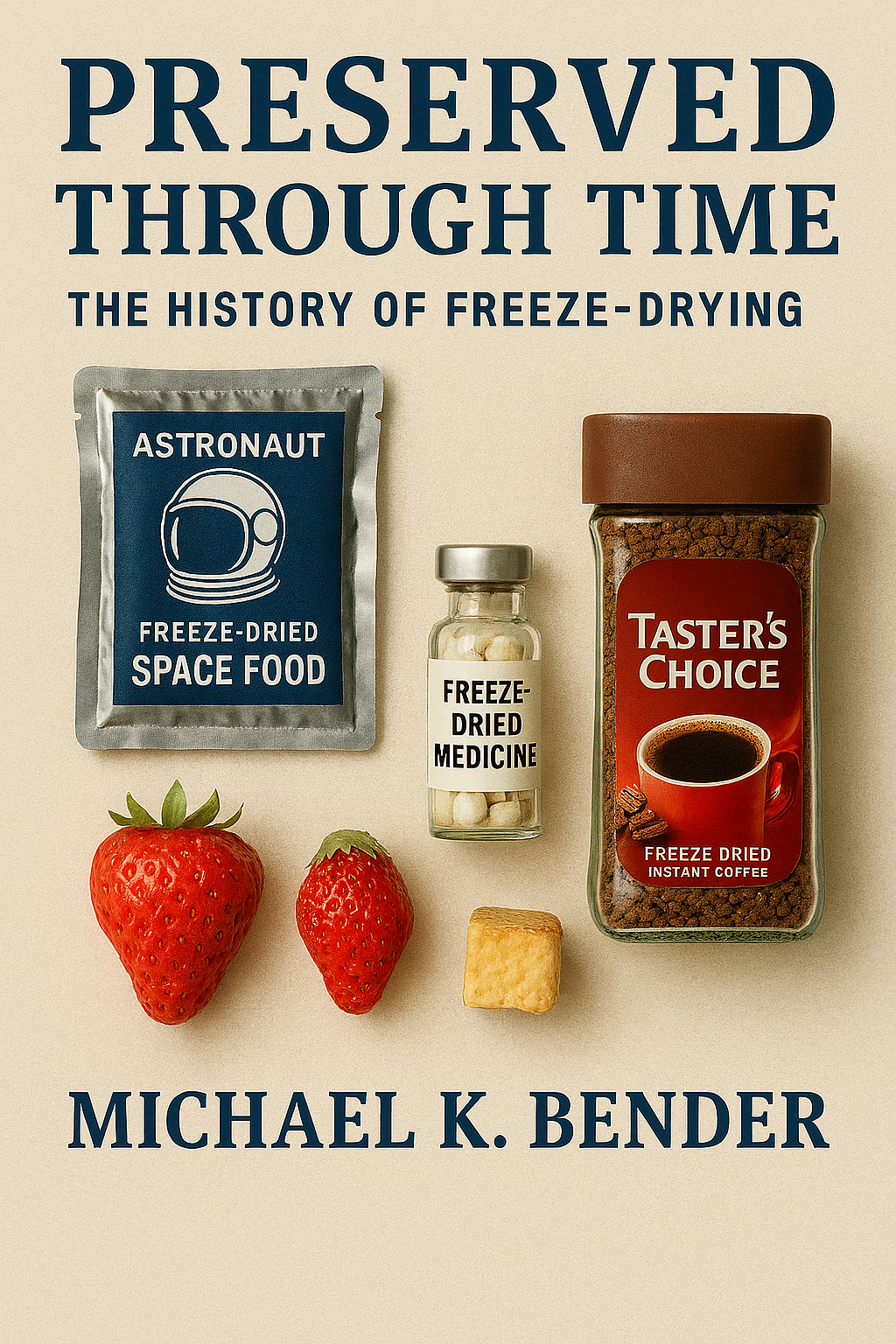
From Ancient Mountains to Modern Medicine: How Forgotten Innovators Built the Infrastructure That Changed the World
The story of freeze-drying spans millennia, from Indigenous peoples preserving food in mountain altitudes to scientists enabling the global distribution of life-saving vaccines.”
CAIRO, NY, UNITED STATES, February 1, 2026 /EINPresswire.com/ -- History remembers the famous names: the vaccine developers, the laboratory directors, the public faces of scientific triumph. What it forgets are the engineers and innovators working in the shadows, solving the technical problems that made those triumphs possible. Freeze-drying is a case in point—a technology so fundamental to modern medicine that its absence would have rewritten the twentieth century, yet so invisible that few know its name or its makers. Preserved Through Time: A History of Freeze Drying, a new comprehensive history by Michael K Bender, recovers these lost narratives, honoring the pioneering scientists whose work changed the world without changing their place in our collective memory.— Michael K Bender
The story of freeze-drying spans millennia, from Indigenous peoples preserving food in mountain altitudes to scientists enabling the global distribution of life-saving vaccines. Yet the names of those who transformed this ancient principle into modern medical technology have largely vanished from history. Michael K Bender's Preserved Through Time: A History of Freeze Drying recovers these forgotten innovators—including his father, Charles E. Bender—who built the invisible infrastructure of twentieth-century medicine.
Preserved Through Time follows freeze-drying's remarkable journey across cultures and centuries: from ancient Incan chuño—potatoes preserved through the natural freeze-drying conditions of the high Andes—through the scientific foundations established in the nineteenth century, the urgent medical innovations of World War II, the technological demands of the space race, and today's cutting-edge applications in pharmaceuticals and biologics. This is not merely a technical chronicle but a recovery project, revealing how each era's breakthroughs depended on engineers and scientists whose contributions were essential yet unrecognized.
"The Incas understood intuitively what took Western science centuries to formalize," Bender explains. "They knew that certain conditions could preserve food indefinitely. Modern freeze-drying is built on that same principle, refined through generations of innovators who rarely receive credit for their work. This is more than a technical history—it's about human ingenuity across time, about people like my father who saw possibilities others missed, who solved problems that seemed insurmountable, and who built technologies that changed the world while working in obscurity. Their contributions were known only to specialists in their fields, but their work matters, and their stories deserve to be told."
The book confronts an uncomfortable pattern repeated throughout freeze-drying's history: brilliant scientists and engineers made fundamental contributions that enabled entire industries, yet their names were overshadowed by the companies they built or the products their work made possible. Charles E. Bender's career exemplifies this pattern—a story of remarkable innovations that nearly disappeared from the historical record.
In 1947, Bender founded Microbiological Associates in Flemington, New Jersey, developing a groundbreaking process for producing defatted chicken embryo extract, a critical component of tissue culture media that provided the consistent, reproducible conditions vaccine researchers desperately needed. In the 1950s, he and his colleagues pioneered an ingenious method for isolating viruses using fluorocarbons, enabling scientists to separate viruses from contaminating materials far more efficiently than previous methods—laying essential groundwork for modern virology. In 1953, he co-founded VirTis Company with Martin C. Parkinson, which became one of the world's leading suppliers of freeze-drying equipment. His numerous patents vacuum valves, specialized freeze-drying flasks, heat-sealing systems for ampules, sterile caps, and magnetic stirrer apparatus—transformed an experimental technique into an industrial process. The equipment his company produced became essential tools in laboratories and pharmaceutical facilities worldwide, enabling advances in vaccine production and biological research that continue to benefit humanity today.
Michael K Bender
+1 518-704-1688
email us here
Mkbender.com
Legal Disclaimer:
EIN Presswire provides this news content "as is" without warranty of any kind. We do not accept any responsibility or liability for the accuracy, content, images, videos, licenses, completeness, legality, or reliability of the information contained in this article. If you have any complaints or copyright issues related to this article, kindly contact the author above.
